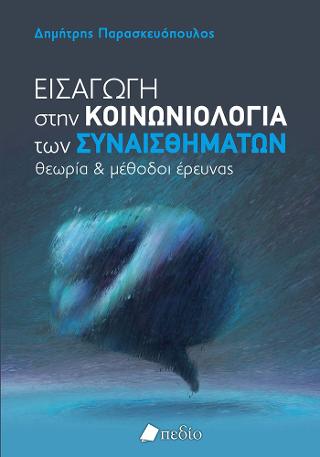
Emotion is inextricably intertwined with the ontological dimension of human existence, the contact with the social self, our social involvement and interaction in the social world. As a form of "ethereal" energy, poetically speaking, emotion is stirred by its manifest or unfathomable causes, permeates within us, and radiates into all that surrounds us. But is the feeling only an individual matter? Or maybe its manifestation or causality is placed at the intersection of the individual and the social, within their timeless dialectical relationship? If philosophy, psychology, cognitive sciences and neurosciences have dedicated or continue to dedicate research and studies, sociology relatively recently has begun to wonder about the place of emotion in social realities, interactions and interactions in the social world. Recently, or maybe not? Approaching the theoretical work of sociologists and analyzing it, we find that emotion as a problematic and as a concept – even if it is not named – is present in the classical as well as in the later sociological studies. With this finding as a starting point, a brief, but broad overview of the position of emotion in sociological knowledge is carried out, both in the theoretical approaches of the latter and in the methodological strategies of social research.