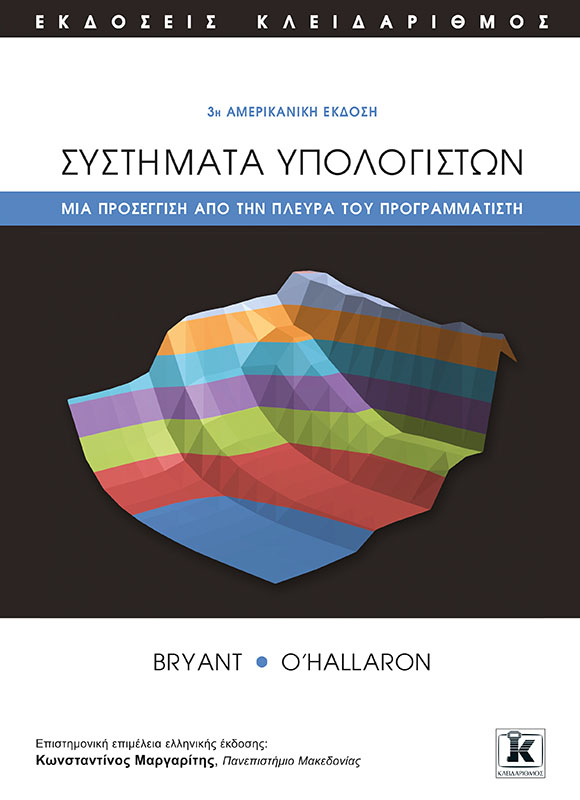
Computer Systems: A Programmer's Approach introduces readers to the important and timeless concepts underlying computer systems, showing how these concepts affect the correctness, performance, and usability of programs. Most books on computer systems are written from the developer's perspective, describing how to implement the system's hardware or software. This book is written from a programmer's perspective, describing how application programmers can use their knowledge of a system to write better programs. The book's hands-on approach—which includes hundreds of exercises and problems—will make it easier for students to understand what goes on inside modern computers and prepare for more advanced courses in computer systems topics such as compilers, computer architecture, operating systems, and more. , and networking. Extensive companion material for the book is provided (in English) at http://csapp.cs.cmu.edu/ Contents: A Tour of Computer Systems Part I: Program Structure and Execution: Information Representation and Manipulation Machine-Level Program Representation Architecture processors Optimizing Program Performance The Memory Hierarchy Part II: Executing Programs on a System: Linking Contingent Control Flow Virtual Memory Part III: Program Interaction and Communication: System-Level O/O Network Programming Concurrent Programming Appendix A Error Handling Randal E. Bryant is Professor of Computer Science at Carnegie Mellon University and has taught at the undergraduate and graduate levels for nearly 40 years. He has published more than 150 technical articles and the results of his research are used by major computer manufacturers, including Intel, IBM, Fujitsu, and Microsoft. He has been awarded for his research work by the Association for Computer Machinery (ACM) and the Institute of Electrical and Electronics Engineers (IEEE), of which he is an active member. David R. O'Hallaron is Professor of Computer Science and Computer Technology at Carnegie Mellon University and has taught computer systems at the undergraduate and graduate levels for 20 years. In 2004 he was awarded the Herbert Simon Award for Teaching Excellence by the CMU School of Computer Science and in 2003, as a member of the Quake team, he was awarded the Gordon Bell Prize, the top international award in high performance computing.